

Soaking your feet in Epsom salt every day may feel relaxing, but it’s usually unnecessary and may dry or irritate your skin. Epsom salt is magnesium sulfate. While a warm foot soak can feel soothing after a long day, there is limited evidence that Epsom salt provides major health benefits through foot soaking or significantly increases magnesium levels.
For occasional foot care, comfortably warm water may be enough. If you enjoy Epsom salt, occasional use according to the product directions is more reasonable than making it a daily habit. People with diabetes, poor circulation, reduced sensation, open wounds, or certain skin conditions should ask a healthcare professional before routinely soaking their feet.
What Is Epsom Salt?
Epsom salt is magnesium sulfate, a mineral compound commonly used in baths and foot soaks. It is different from table salt.
People use it for relaxation, soothing tired feet, and temporarily softening rough skin. However, some claims about Epsom salt go beyond what available evidence supports.
Is It Safe to Soak Your Feet in Epsom Salt Every Day?
For a healthy adult, occasional use is generally unlikely to cause problems when used as directed. Daily soaking isn’t necessary for most people.
Frequent exposure to water, especially hot water, can contribute to dry or irritated skin. If your feet become itchy, red, tight, cracked, or uncomfortable, reduce the frequency or stop soaking.
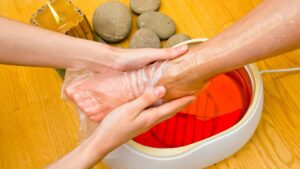
What Happens When You Soak Your Feet in Epsom Salt Every Day?
Your Feet May Feel Relaxed
A warm foot bath can feel soothing after standing, walking, exercising, or wearing uncomfortable shoes. Much of the relaxing effect may come from the warm water and resting your feet.
Your Skin May Feel Softer
Soaking temporarily softens the outer layer of skin, which can make rough areas feel smoother. However, daily Epsom salt baths aren’t required to maintain soft feet.
Your Skin Could Become Dry
Frequent soaking may contribute to dryness, especially when the water is hot, the soak is long, or you don’t moisturize afterward.
Irritation Can Occur
Sensitive skin may react to repeated exposure to Epsom salt or other bath ingredients. Stop if you develop burning, redness, itching, rash, cracking, or worsening dryness.
Does Epsom Salt Remove Toxins?
There is no good evidence that soaking your feet in Epsom salt detoxes your body.
Your liver and kidneys naturally process and remove waste. Foot soaks shouldn’t replace medical care, proper nutrition, or hydration.
Does Epsom Salt Increase Magnesium Levels?
Although Epsom salt contains magnesium, there isn’t strong evidence that soaking your feet significantly raises your body’s magnesium levels.
If you’re concerned about magnesium deficiency, speak with a healthcare professional about diet, testing, or appropriate supplements.
Can Epsom Salt Help With Sore Feet?
A warm soak may temporarily make tired or achy feet feel better, but it doesn’t necessarily treat the cause of the pain.
Foot discomfort can come from excessive activity, poor footwear, injury, arthritis, nerve issues, circulation problems, or other conditions. Persistent or worsening pain should be professionally evaluated.
Can Epsom Salt Help With Swollen Feet?
A soak may feel soothing, but persistent or unexplained swelling shouldn’t automatically be treated with Epsom salt.
Swelling may be related to prolonged standing, injury, inflammation, medications, circulation problems, or other health conditions. Seek medical advice for severe, persistent, or unexplained swelling.
Does Epsom Salt Help With Dry or Cracked Heels?
An occasional soak can temporarily soften dry skin, but soaking alone isn’t a complete treatment.
A basic routine is:
- Wash or briefly soak your feet.
- Dry them thoroughly.
- Apply an appropriate moisturizer.
- Moisturize regularly.
- Avoid aggressive scraping.
Deep cracks, bleeding, pain, or signs of infection should be professionally assessed.
Can You Soak Your Feet Before a Pedicure?
Yes, but you generally don’t need an Epsom salt soak before a professional pedicure.
A normal wash is usually enough because the nail technician will clean and prepare your feet during the service. If you prefer a pre-pedicure soak, plain warm water is sufficient.
Avoid excessive soaking because overly softened skin may become irritated more easily.
How Long Should You Soak Your Feet in Epsom Salt?
Follow the directions on the product and avoid prolonged soaking. A short, comfortable soak is generally preferable to keeping your feet submerged for a long time.
Afterward, dry your feet thoroughly, especially between the toes.
Is Warm or Hot Water Better?
Use comfortably warm water instead of very hot water.
Hot water can irritate or burn the skin. This is especially important for people with reduced sensation, who may not notice excessive heat.

Should You Moisturize After an Epsom Salt Soak?
Yes, especially if your feet tend to be dry.
Dry your feet thoroughly and apply an appropriate moisturizer, focusing on areas such as the heels. Avoid leaving excess moisture between the toes.
Who Should Avoid Daily Foot Soaks?
People With Diabetes
Diabetes may be associated with reduced sensation or circulation problems. Ask your healthcare provider about safe foot-care practices.
People With Poor Circulation
Reduced circulation can affect foot health and healing. A professional can determine whether soaking is appropriate.
People With Reduced Sensation
Avoid very hot water if you can’t reliably feel temperature.
People With Open Wounds
Don’t routinely soak cuts, blisters, or sores without medical guidance.
People With Skin Conditions
If you have eczema, dermatitis, severe dryness, or another skin condition, ask a healthcare professional before using regular Epsom salt soaks.
Can Epsom Salt Irritate Cracked Skin?
Yes. Severely cracked, broken, or irritated skin may sting during an Epsom salt soak. Natural products aren’t automatically safe for damaged skin.
Can You Use Epsom Salt on an Ingrown Toenail?
Don’t rely on Epsom salt to treat an ingrown toenail. A warm soak may temporarily improve comfort, but it doesn’t necessarily correct the problem.
Avoid digging into the nail or aggressively cutting the corners. Repeated pain, swelling, drainage, or infection should be evaluated by a professional.
Can You Use Epsom Salt for a Fungal Infection?
An Epsom salt soak isn’t a proven treatment for fungal infections.
Symptoms may include thickened or discolored nails, brittle nails, scaling, itching, or cracking between the toes. A healthcare professional can recommend the right treatment.
What Is Better Than Daily Epsom Salt Soaks for Dry Feet?
For softer feet, a simple routine may be more useful:
Wash → dry thoroughly → moisturize
You don’t need to soak your feet every day. Regular hygiene and moisturizing can help maintain healthy skin.
How Often Should You Use an Epsom Salt Foot Soak?
There’s no universal schedule. Occasional use is generally more reasonable than soaking every day.
Pay attention to your skin. If you notice dryness, irritation, cracking, or discomfort, reduce the frequency or stop.
Epsom Salt vs. Plain Warm Water
Feature | Epsom Salt | Warm Water |
Relaxation | Yes | Yes |
Temporarily softens skin | Yes | Yes |
Extra ingredients needed | Yes | No |
Necessary before pedicure | No | No |
Potential irritation | Possible | Generally lower |
Proven detox | No | No |
For basic foot care, plain warm water is often enough.
How Can You Safely Prepare an Epsom Salt Foot Soak?
- Use a clean basin.
- Add comfortably warm water.
- Follow the package directions for Epsom salt.
- Keep the soak relatively short.
- Dry your feet carefully, including between the toes.
- Moisturize afterward if your skin is dry.
Frequently Asked Questions
What happens if I soak my feet in Epsom salt every day?
Daily soaking may feel relaxing and temporarily soften the skin, but it isn’t necessary for most people. Frequent soaking can contribute to dryness or irritation.
Does Epsom salt detox your body?
No. There is no good evidence that Epsom salt foot baths detox the body. Your liver and kidneys naturally process waste.
Can Epsom salt soaks increase magnesium?
There isn’t strong evidence that foot soaking significantly increases magnesium levels in the body.
Is it okay before a pedicure?
Yes, but it’s usually unnecessary. Washing your feet normally or using plain warm water is sufficient.
How long should you soak your feet?
Follow the product directions and avoid excessively long soaks. A short, comfortable soak is preferable.
Who should avoid daily foot soaks?
People with diabetes, poor circulation, reduced sensation, open wounds, significant skin problems, or other foot conditions should consult a healthcare professional before routinely soaking their feet.
Conclusion
Soaking your feet in Epsom salt every day isn’t necessary for most people. An occasional soak may feel relaxing and temporarily soften the skin, but there is limited evidence of major health benefits from regular Epsom salt foot baths.
Frequent or prolonged soaking can contribute to dry or irritated skin. Use comfortably warm water, keep the soak short, dry your feet thoroughly, and moisturize afterward.
For a pedicure, you don’t need an elaborate Epsom salt routine. Clean feet and basic skincare are usually enough.
If you’re searching for nail salons near me, nail salons in Naperville, nail salons open near me, or a professional pedicure in Naperville, Naperville Nail Spa offers manicures, pedicures, nail enhancements, and other nail services. Call Naperville Nail Spa at (331) 701-7925 to learn more or schedule your next appointment.
