
Vietnamese Americans became highly represented in the U.S. nail salon industry because of historical immigration, accessible training, community networks, and entrepreneurship. This trend became especially strong after the Vietnam War, when many Vietnamese refugees entered the beauty industry and created opportunities for relatives, friends, and later generations.
This does not mean Vietnamese people are naturally better suited to nail work or that most Vietnamese Americans work in salons. The industry’s growth is better understood through historical and economic circumstances.
How Did Vietnamese Americans Become Connected to Nail Salons?
The story is often traced to the 1970s. After the fall of Saigon in 1975, many Vietnamese refugees resettled in the United States. Some arrived with limited English skills, financial resources, and a need to find work quickly.
Actress Tippi Hedren is often credited with helping introduce a group of Vietnamese refugee women to manicuring. She helped connect them with training, and some went on to work in the beauty industry.
Over time, Vietnamese immigrants and their families opened nail salons throughout California and eventually across the United States.
Why Were Nail Salons an Attractive Career?
Nail work offered several practical advantages for some Vietnamese immigrants.
Accessible Training
Compared with careers requiring a college degree, becoming a licensed nail technician can involve a shorter vocational training period, depending on state requirements.
Business Opportunities
Nail services can provide a path from employee to independent technician and eventually salon owner.
Lower Startup Barriers
Opening a small nail business may require less capital than many other businesses, making entrepreneurship more achievable for some immigrants.
Flexible Work
Salon work can sometimes offer schedules that help workers balance employment and family responsibilities.
Community Support
People entering the industry could learn from relatives, friends, and other community members already working in salons.
These advantages helped create a cycle in which nail work became increasingly established within some Vietnamese American communities.
How Did Family and Community Networks Help?
One of the biggest factors was community networking.
A person who entered the industry could introduce a sibling to a job, a cousin to an employer, or a friend to a training program. Experienced salon owners could also share practical knowledge about supplies, customers, licensing, and running a business.
This type of ethnic or immigrant economic network is not unique to Vietnamese Americans. Similar patterns have developed in many immigrant communities.
Why Are Vietnamese Nail Salons Common in California?
California became central to the development of Vietnamese American nail businesses because of its large Vietnamese immigrant population after the Vietnam War.
Southern California, particularly Orange County, developed major Vietnamese American communities. As these communities grew, Vietnamese-owned businesses, including nail salons, became increasingly common.
From California, Vietnamese technicians and salon owners helped spread the industry to other parts of the country.
Did Tippi Hedren Start the Vietnamese Nail Industry?
It is more accurate to say that Tippi Hedren influenced an early part of the story rather than saying she single-handedly created the industry.
Her efforts helped a group of Vietnamese refugee women learn manicuring, but the modern Vietnamese American nail industry developed over decades through immigration, entrepreneurship, family networks, licensing, and business expansion.
Are Most Nail Technicians Vietnamese?
No. Vietnamese Americans have a particularly strong presence in the U.S. nail industry, but technicians come from many backgrounds, including Korean, Chinese, Filipino, Latino, Black, White, and other communities.
The demographic makeup also varies by city and region. It is more accurate to say Vietnamese Americans have historically been highly represented in the industry rather than claiming most nail technicians everywhere are Vietnamese.
Why Do Some Vietnamese Nail Salons Become Family Businesses?
Family members may help with reception, scheduling, cleaning, supplies, bookkeeping, customer service, nail services, or management.
Children of salon owners may also learn about the business from an early age. This can make it easier for a family to continue or expand an established salon.
However, many Vietnamese Americans pursue careers completely outside the nail industry.
Is There a Cultural Reason Vietnamese People Are Good at Nails?
There is no evidence that Vietnamese people are inherently better at doing nails because of their ethnicity.
A stronger explanation is the effect of established community networks. Once a profession becomes common within a community, newcomers may have easier access to employers, mentors, training, suppliers, customers, and business knowledge.
In other words, history and network effects are much better explanations than biology or ethnicity.
What Nail Services Do Vietnamese Technicians Offer?
Vietnamese nail technicians work across the industry and may provide:
- Manicures and pedicures
- Gel manicures
- Acrylic nails
- Dip powder
- Nail extensions
- Nail art
- French manicures
- Spa pedicures
The services offered depend on the individual technician and salon.
How Has the Industry Changed?
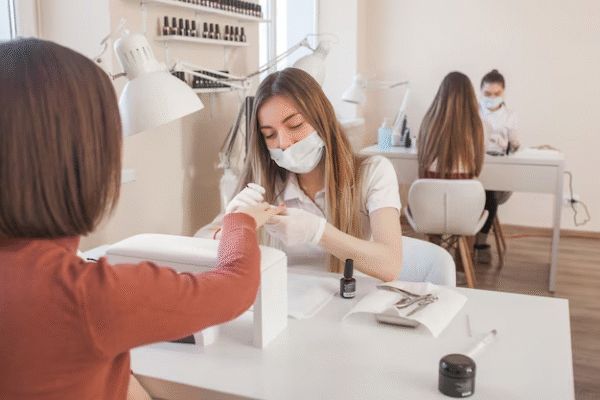
Today’s nail salons may use modern products, digital booking systems, specialized pedicure equipment, LED or UV gel systems, dip powder, builder gel, and advanced nail-art techniques.
Vietnamese American salon owners have also expanded from small neighborhood businesses into larger salons and multi-location operations.
What Challenges Have Nail Workers Faced?
Like workers in many service industries, nail technicians can face long hours, repetitive-motion strain, chemical exposure, difficult working conditions, language barriers, and customer-service pressures.
These concerns have contributed to broader discussions about workplace safety, ventilation, fair pay, product safety, and labor protections.
Not every salon has the same conditions, so individual businesses should be evaluated on their own practices.
How Important Is the Nail Industry to Vietnamese Americans?
The nail industry has played a significant role in the economic history of some Vietnamese American communities.
For certain immigrants, it provided a practical path into employment and business ownership without requiring extensive formal education or advanced English skills at the start of their careers.
A successful salon could provide enough income to hire employees, expand locations, support family members, or invest in other businesses and property. This helped make nail salons an important example of immigrant entrepreneurship in the United States.
Does Working in a Nail Salon Mean Someone Is Vietnamese?
No. A person’s occupation does not determine their ethnicity or nationality.
Vietnamese Americans work in medicine, engineering, technology, education, finance, construction, law, hospitality, government, retail, and many other fields.
The connection between Vietnamese Americans and nail salons is a specific story about immigration and economic opportunity, not a definition of Vietnamese Americans as a whole.
How Can You Find a Good Nail Salon?
When searching for nail salons near me, ethnicity should not be the main factor in choosing a salon.
Instead, consider cleanliness, technician experience, recent reviews, pricing, communication, and whether the salon offers the specific manicure, pedicure, or nail service you need.
Frequently Asked Questions
Why are so many Vietnamese people nail technicians?
Vietnamese Americans became strongly represented in the U.S. nail industry because of immigration patterns, early training opportunities, entrepreneurship, and community networks. Once the profession became established, relatives and newcomers could more easily enter the industry.
Who introduced Vietnamese refugees to nail work?
Actress Tippi Hedren is widely credited with helping introduce a group of Vietnamese refugee women to manicuring in the 1970s. Her involvement was an early influence, but the industry grew through many people and businesses over subsequent decades.
Are most nail technicians Vietnamese?
Not necessarily. Vietnamese Americans are highly represented in the industry, but nail technicians come from many different ethnic and cultural backgrounds.
Why did Vietnamese immigrants choose nail salons?
Nail work offered some immigrants an accessible path into employment, vocational training, entrepreneurship, and business ownership. Community connections also helped newcomers find jobs and learn the profession.
Do Vietnamese Americans own most nail salons?
Vietnamese Americans own many nail businesses, particularly in areas with large Vietnamese American communities. However, salons are owned and operated by people from many backgrounds.
Is there a special Vietnamese nail technique?
There is no single nail technique that is inherently Vietnamese. Vietnamese technicians use the same broad services, products, and techniques found throughout the American nail industry.
Conclusion
The strong presence of Vietnamese Americans in U.S. nail salons is primarily the result of history, immigration, entrepreneurship, and community networks—not an inherent connection between ethnicity and nail work.
The trend gained momentum after Vietnamese refugees arrived in the United States following the Vietnam War. Early opportunities to learn manicuring helped some women enter the beauty industry, while family networks, vocational training, and entrepreneurship allowed the profession to grow.
Today, Vietnamese Americans remain highly visible in the nail industry, alongside workers and business owners from many other backgrounds.
When searching for nail salons near me, nail salons in Naperville, or nail salons open near me, focus on cleanliness, technician experience, service quality, reviews, and pricing. Naperville Nail Spa provides professional manicure and pedicure services for clients seeking quality nail care in Naperville. Call (331) 701-7925 to learn more or schedule an appointment.
